Graphene

Graphene
Graphene is an allotrope of carbon in the form of a two-dimensional, atomic-scale, hexagonal lattice in which one atom forms each vertex. It is the basic structural element of other allotropes, including graphite, charcoal, carbon nanotubes and fullerenes. It can be considered as an indefinitely large aromatic molecule, the ultimate case of the family of flat polycyclic aromatic hydrocarbons.Graphene and its band structure and Dirac cones, effect of a grid on doping.
Graphene has many unusual properties. It is about 200 times stronger than the strongest steel. It efficiently conducts heat and electricity and is nearly transparent. Graphene shows a large and nonlinear diamagnetism, greater than graphite and can be levitated by neodymium magnets.
Graphene is a transparent and flexible conductor that holds promise for various material/device applications, including solar cells, light-emitting diodes (LED), touch panels and smart windows or phones. For example, Graphene-based touch panel modules have been used in volume to cell phone, wearable device and home appliance manufacturers.
|
No. |
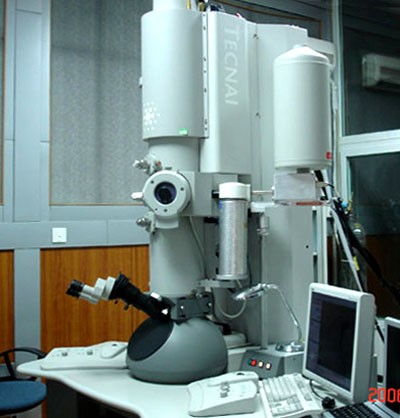
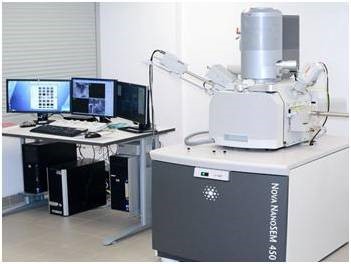
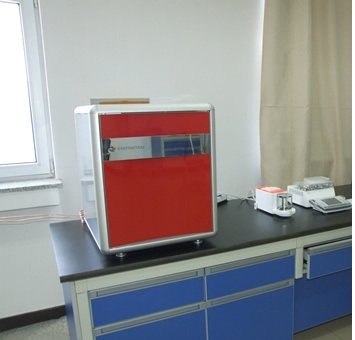
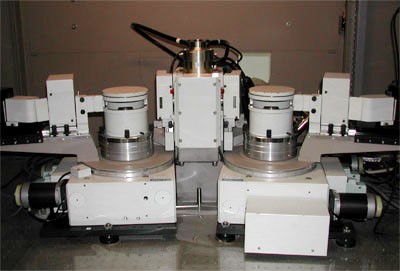
Instrument |
Test item |
Instrument pictures |
|
1 |
High resolution transmission electron microscopy |
Layer |
|
|
2 |
Scanning electron microscope |
Microscopic morphology |
|
|
3 |
Elemental analyzer |
Density Ash Chemical% |
|
|
4 |
X ray diffractometer |
Layers condition |
|
|
5 |
ICP-AES full spectrum direct reading plasma emission spectrometer |
Metal ion content |
|
|
6 |
XPS analyzer |
Carbon oxygen ratio |
|
|
7 |
BET tester |
Specific surface area |
|
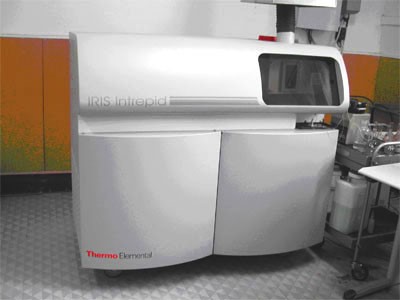
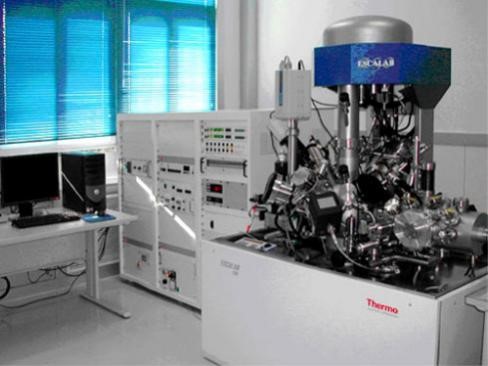
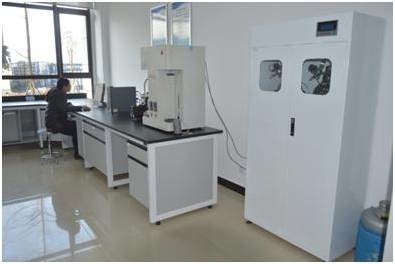
Application of graphene in battery
Similar to the super capacitor, ultra-thin graphene nano materials excellent conductivity can form two-dimensional conductive contact with the particle electrode active material of lithium ion battery, constructing three-dimensional conductive network in the electrode, which can greatly improve the battery performance. The experimental results show that graphene conductive additives can greatly reduce the internal resistance of battery, improve the high rate charge and discharge performance of the battery, and prolong the battery cycle life; also can increase the capacity of active material g play, so as to improve the battery capacity; can also reduce the amount of conductive agent, is conducive to the design of high energy density batteries; in addition, containing graphene the conductive agent battery in high rate discharge in the process of heating is relatively small, the surface temperature of the battery is relatively lower, which is conducive to improving the safety of the battery.
Taking commercial lithium iron phosphate material as an example, low conductivity is the most important factor restricting its electrochemical performance. Based on the excellent conductivity of graphene, Liu Zhaoping proposed a new method for the modification of lithium iron phosphate by using graphene instead of conventional pyrolytic carbon. The synthesis of graphene / LiFePO4 composite cathode materials with spherical micro nano structure, including graphene uniformly coated lithium iron phosphate nanoparticles, and the formation of a three-dimensional conductive network in the two micron particles (Figure 3). Compared with carbon coating, graphene modification can significantly improve the rate performance and cycle stability of lithium iron phosphate. The work also provides useful guidance for the structural design and modification of other electrode materials.
In addition, graphene can also be coated on the foil collection fluid to form graphene functional coating aluminum foil. The coating using conductive graphene excellent and unique two-dimensional nanostructure, can significantly reduce the interfacial resistance between sheet and foil, and can improve the binding force between the active material and the current collector, and the collector can inhibit corrosion in a certain extent, so the new type collector can make the battery rate discharge capacity and cycle life has been further improved.
Graphene material has entered the stage of application and verification of downstream battery enterprises, but its cost problem still restricts its large-scale application. Although the cost of graphene has been greatly reduced in recent years, there is still a big gap compared with the traditional conductive carbon black and graphite. In the lithium industry severe downward pressure of the environment, the problem of graphene is still the development of low cost and high quality to be solved.
Development and application of graphene
Graphene is currently known as the most hard, and has the highest conductivity and thermal conductivity of the material.
Therefore, graphene and graphene sheets in the defense industry, aerospace industry, automotive industry, communications industry, energy industry and other fields, will have a wide range of applications. In recent years, many domestic and foreign organizations have focused on the application of the possibility of the role of graphene.
Graphene has been in high performance composite materials, display and sensing materials, such as precision electronic functional materials, super capacitors, fuel cells, energy storage materials and other new energy materials application development aspects, have very outstanding performance. Especially in the high performance composite materials, the performance is excellent.
It should be emphasized that the graphite has a very large shape ratio (diameter / thickness ratio), and has the basic electrical conductivity and good lubrication, corrosion resistance and high temperature resistance. It is found that graphene is the material which is found to have the highest strength, and the strength of graphene is even more than that of diamond. At the same time, graphene sheets with nano thickness, easy to other materials such as polymer materials, composite, and form a good composite interface. Therefore, graphene can be prepared by high strength, high temperature resistance, high temperature resistance and electrical conductivity. Graphene nanoplatelets can make the original plastic strength, high hardness, can make the coating improved in corrosion resistance, improve the wear resistance; in addition, graphene nanoplatelets would also give composite materials (plastics, rubber, fiber, ink) excellent conductive, antistatic performance.
In a word, graphene microchip is excellent modifier, is expected in the polyimide (PI), nylon (PA), polycarbonate (PC), polyphenylene sulfide (PPS), poly (POM) and polyurethane (PU), poly (ethylene terephthalate) (PET), poly (butylene terephthalate) (PBT), polypropylene (PP), polyethylene (PE), polystyrene (PS), acrylonitrile - butadiene - styrene (ABS) etc. all kinds of plastic changes in play an important role in all kinds of plastics, rubber, fiber, ink and other products.
